Greenhouse robots have a clear business case when they handle work that is repetitive, time-sensitive, or hard to staff. The strongest openings are not robot sales alone; they include crop monitoring, internal transport, harvesting support, and services that turn machine data into daily decisions.
A useful test is simple: does the robot cut paid labor, reduce crop loss, or let a grower run more plants with the same team?
Quick read
- Start with repeatable tasks in fixed rows.
- Charge for a service when growers want low upfront cost.
- Treat harvesting as a harder step than transport or crop checks.
The business case starts with the crop, not the machine. Greenhouses give robots a more controlled setting than open fields, but plants still vary in size, color, shape, and ripeness.
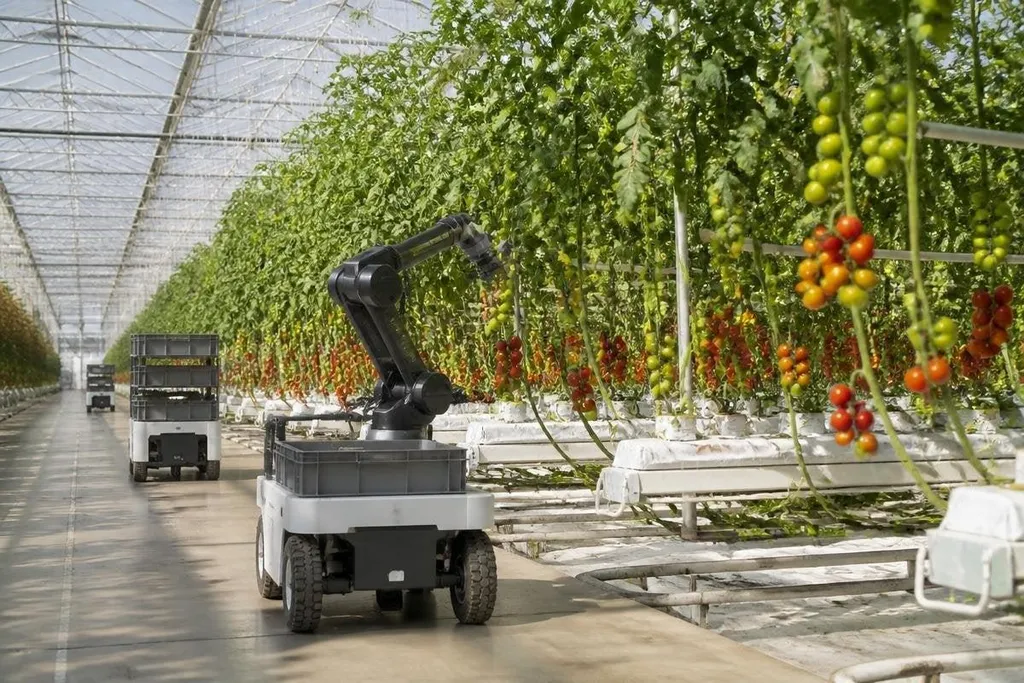
Systems that work well around uniform trays may struggle with tangled vines or fruit hidden behind leaves. That difference creates room for focused products. A mobile base can move along marked paths, while cameras inspect leaves, stems, fruit, or empty growing spaces. A robotic arm can then act on a smaller set of tasks, such as moving trays or picking a crop that presents a clear target.
Four ways to build a business
Selling hardware is one route. A company can also install the robot, maintain it, provide software updates, and charge for support. That model suits growers who have staff but lack robotics technicians.
A rental or service model lowers the first payment. The supplier owns the machine and charges for operating hours, inspected plants, moved trays, or another measured task. This approach also puts maintenance with the supplier, which matters when a stopped robot can interrupt a daily production plan.
Crop data creates another opening. Cameras can record plant positions, visible growth, signs of stress, and harvest status. The value depends on what the grower can do with that information: change irrigation, send a worker to a specific row, or remove a damaged plant before it affects nearby work.
The fourth route is integration. The machine may need to exchange data with crop-management software, door controls, charging equipment, or conveyor systems. Companies that handle those connections can earn revenue even when they do not build the mobile base or arm.
Those connections create a second market around greenhouse robots. A buyer weighing that work can start with Robot 24, then compare the company, robot, greenhouse task, and data connection before pricing the service. The next question is where these machines can earn revenue first.
Where the work is easiest
Internal transport is a practical starting point because trays, bins, and carts follow known routes. The robot still needs safe motion, obstacle detection, charging, and a way to hand off its load, but the target stays fairly consistent.
Crop scouting can also support a clear service. The robot does not need to fix every plant. It needs to collect repeatable images and send a worker to the right place with enough warning to act.
Harvesting is harder. The system must find ripe produce, reach it without damage, cut or grip it, and place it into a container. A small error can reduce saleable crop, so the business case must measure both labor savings and product quality.
I’d start with transport or crop checks before building a harvesting robot. The tasks are narrower, the proof is easier to collect, and a failed run is less likely to damage the crop.
What buyers will ask
A greenhouse operator will want more than a task demo. They will ask how the robot behaves around workers, wet floors, narrow paths, changing light, and a crop that does not match the training images.
They will also ask who fixes it. A machine that needs a specialist visit for every sensor fault may cost more to run than a manual process. Battery charging, cleaning, software support, spare parts, and downtime belong in the price discussion from the start.
The supplier must show a measured result on the grower’s crop. A robot that moves 100 empty trays says little about its value if the real site uses mixed loads, blocked aisles, or frequent stops.
A buying checklist
Use these questions before approving a greenhouse robotics project:
- Name the task: record the exact work, route, load, or crop action.
- Set the measure: track labor hours, crop damage, stopped time, or inspected plants.
- Check the site: map paths, floor conditions, lighting, doors, and charging points.
- Price the service: include training, repairs, software, cleaning, and downtime.
- Plan the handoff: decide where people load, unload, review images, or fix exceptions.
- Run a limited trial: set a start date, success measure, and stop rule before purchase.
The best greenhouse robot business may be the one that removes a narrow daily task and proves its value in the grower’s own rows. The next question is not how human the robot looks; it is whether the machine can complete that task often enough to pay for its place.